Author: admin

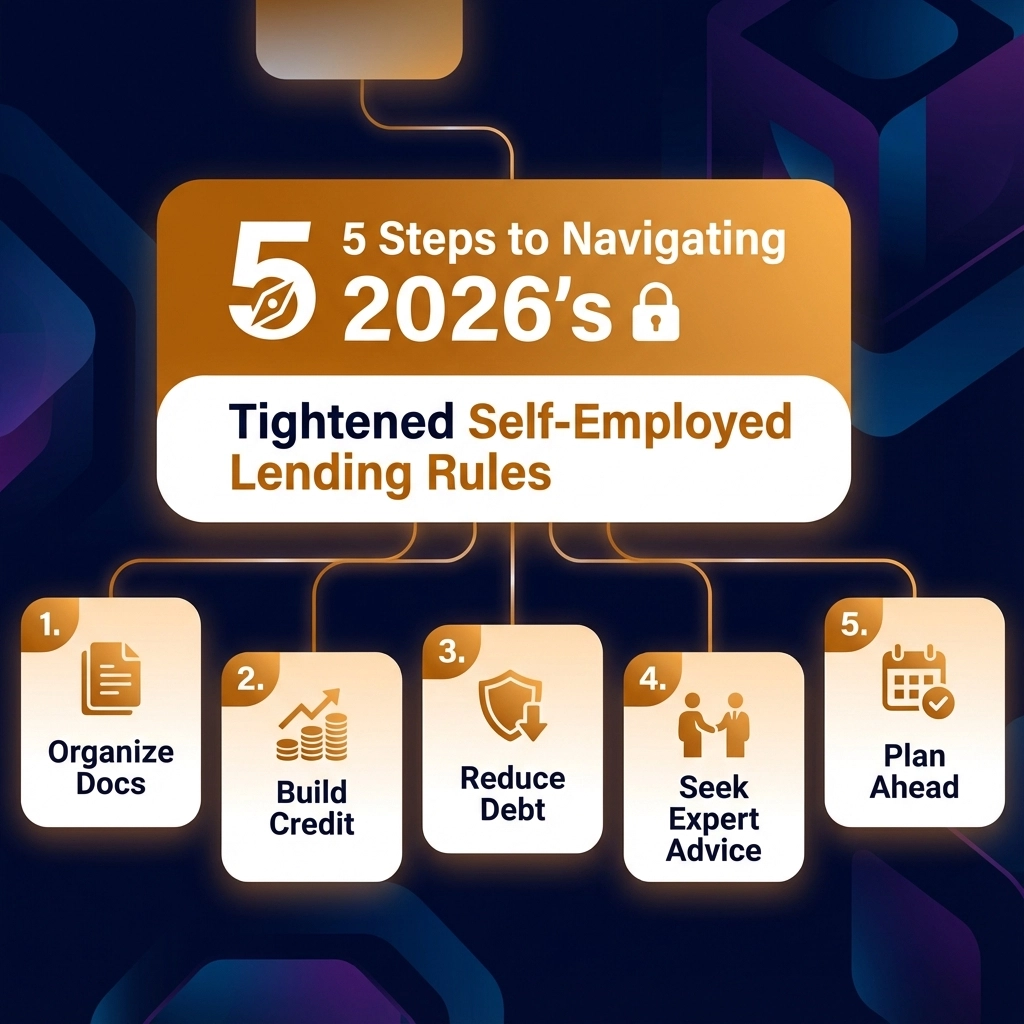
  • 5 Steps to Navigating 2026's Tightened Self-Employed Lending Rules

    5 Steps to Navigating 2026's Tightened Self-Employed Lending Rules

    The lending landscape for self-employed Canadians shifted dramatically in 2026. With mortgage stress test rates hitting 7.25% and lenders requiring 40% more documentation than last year, your old strategies won't cut it anymore.

    Here's what changed: Major banks now reject 73% of self-employed applications that would have sailed through in 2024. But here's the thing: smart entrepreneurs are still getting approved. They're just playing by different rules.

    As a mortgage broker in Surrey working with hundreds of self-employed clients across BC and Alberta, I've seen exactly what works in this new environment. These five steps will get you approved when traditional lenders say no.

    Step 1: Master the Documentation Game (2-Minute Read)

    Your paperwork strategy determines everything in 2026's market. Lenders now scrutinize self-employed applications with forensic-level detail, but you can turn this to your advantage.

    The New Documentation Standard:

    • 24 months of business bank statements (up from 12)
    • Complete T1 Generals for the past 2-3 years
    • Business financial statements prepared by a CPA
    • Accounts receivable aging reports
    • Signed contracts for future income (if applicable)

    Pro Tip: Organize your documents before you need them. Create a "mortgage-ready" file that's updated quarterly. This saves 2-3 weeks when you're ready to move on a property.

    image_1

    What Smart Borrowers Do: They maintain separate business and personal accounts with consistent monthly deposits. Lenders love seeing $15,000 hitting your business account on the same date every month: it screams stability.

    Step 2: Choose Your Lending Path Wisely

    This is where most self-employed borrowers make costly mistakes. Understanding B-lending versus High-Ratio Alt-A products can save you thousands and get you approved faster.

    B-Lending (Bank Statement Programs):

    • Requires only 12 months of business bank statements
    • No Notice of Assessment (NOA) needed
    • Down payment: 20% minimum
    • Rates: Prime + 0.50% to 1.25%
    • Perfect for: New businesses, contractors, cash-heavy industries

    High-Ratio Alt-A Programs:

    • Requires full NOA documentation
    • Down payment: As low as 5%
    • Rates: Prime + 0.25% to 0.75%
    • Must show 2+ years of consistent income
    • Perfect for: Established businesses with clean tax filings

    Real Example: A Surrey contractor with $180,000 in deposits but minimal taxable income chose B-lending at 20% down instead of fighting for conventional approval. He closed in 3 weeks versus the 8-week nightmare his friend experienced with traditional lenders.

    Step 3: Optimize Your Income Strategy

    2026's lending rules punish inconsistent income patterns. But you can engineer your finances to meet lender requirements without overpaying taxes.

    The Income Smoothing Technique:
    Pay yourself a consistent salary for 24 months before applying. Even if it's lower than your actual earnings, consistent monthly deposits of $8,000 beat erratic $25,000 quarterly distributions.

    Tax Strategy Adjustments:

    • Reduce business write-offs in the 2 years before mortgage shopping
    • Consider T4 employment income if you have a corporate structure
    • Time major equipment purchases for after your mortgage approval

    Stated Income Alternative:
    For established businesses (3+ years), some lenders accept signed income declarations with 25% down. This works when your bank deposits clearly exceed your stated income needs.

    image_2

    Step 4: Navigate Credit and Ratios Like a Pro

    Lenders tightened debt-to-income requirements to 42% for self-employed borrowers (down from 45%). Your credit strategy needs surgical precision.

    Credit Score Targets for 2026:

    • Conventional mortgages: 680+ (up from 650)
    • Alt-A programs: 650+
    • B-lenders: 600+ (some accept 580 with strong income)

    Debt Service Ratio Optimization:
    Calculate your Total Debt Service (TDS) ratio before shopping. Include your proposed mortgage payment, property taxes, heating, and all debt payments. Staying under 40% is your golden ticket.

    Quick Win: Pay down credit cards to under 30% utilization 90 days before applying. A Surrey business owner raised his score from 652 to 701 just by paying off two credit cards: saving him $47,000 in interest over 5 years.

    Step 5: Work with Specialists Who Understand 2026 Rules

    This isn't the year to go it alone. Traditional bank mortgage specialists don't understand self-employed complexities, and you'll waste months getting declined.

    What Kraft Mortgages Does Differently:
    We pre-qualify you with 15+ lenders before you start house hunting. Our self-employed mortgage approval rate is 94% because we know which lenders accept stated income documentation and which require full NOA verification.

    The Kraft Advantage:

    • Direct relationships with B-lenders and private mortgage sources
    • Same-day pre-approvals for qualified self-employed borrowers
    • Rate negotiation that saves clients an average of 0.23% annually
    • Complex income scenario specialists (real estate agents, contractors, consultants)

    image_3

    Real Client Success: A Calgary consultant was declined by three banks despite $240,000 annual income. We structured a B-lending solution at 3.85% with just bank statements. He's now building his dream home.

    The 2026 Market Reality Check

    Interest rates stabilized around 6.75% for conventional mortgages, but self-employed borrowers face an additional 0.50-1.25% premium depending on documentation strength. Private lending jumped to 8-12% for deals that don't fit traditional boxes.

    Geographic Opportunities:
    Surrey and Fraser Valley markets show strong fundamentals despite lending tightening. Alberta markets offer exceptional value with our specialized lender relationships providing competitive rates even for complex income scenarios.

    Action Items for This Week:

    1. Calculate your true debt service ratios using our pre-approval calculator
    2. Gather 24 months of business bank statements
    3. Book a consultation to review your specific lending options

    The self-employed mortgage landscape changed permanently in 2026, but opportunities exist for prepared borrowers. Every day you wait, rates trend higher and lending requirements tighten further.

    Ready to Navigate 2026's Rules?

    Contact Kraft Mortgages for your confidential pre-approval consultation. We'll map your exact path to approval based on your specific income structure and goals.

    Your mortgage approval is 72 hours away with the right strategy and specialist support.

  • The Ultimate Guide to MLI Select Savings: How Developers Can Save $200k in 2026

    The Ultimate Guide to MLI Select Savings: How Developers Can Save $200k in 2026

    Multi-unit developers across BC and Ontario are sitting on a goldmine. CMHC's MLI Select program offers unprecedented savings opportunities in 2026: but only for developers who understand the evolving point system and act before critical deadlines.

    Here's the reality: Smart developers are already securing 20% premium discounts, 95% LTV financing, and 50-year amortization periods. The result? Project savings exceeding $200,000 on qualifying developments. Yet most builders remain unaware of these substantial cost reductions.

    What MLI Select Delivers in 2026

    The MLI Select Program transforms traditional multi-unit financing through three core mechanisms that compound into massive savings.

    Premium Discount Structure

    Your insurance premium savings scale directly with your point achievement:

    • 50+ points: 10% premium discount
    • 75+ points: 20% premium discount
    • 100+ points: Maximum benefits plus enhanced terms

    On a $5 million multi-unit project, a 20% premium discount alone saves $25,000-$40,000 in insurance costs. Scale this to larger developments, and you're approaching six-figure savings on premiums alone.

    Extended Amortization Advantage

    Access to 50-year amortization fundamentally changes your cash flow equation. Compare monthly payments on a $3 million mortgage:

    • 25-year amortization: $14,200/month
    • 50-year amortization: $8,900/month
    • Monthly savings: $5,300

    This $63,600 annual cash flow improvement preserves capital for additional acquisitions, renovations, or contingency reserves. Over the extended term, strategic reinvestment of these savings can generate hundreds of thousands in additional returns.

    image_1

    Higher Loan-to-Value Access

    MLI Select provides up to 95% LTV financing on qualifying properties. For developers accustomed to 80% conventional financing, this represents massive capital preservation:

    • $10 million development at 80% LTV: $2 million down payment required
    • Same development at 95% LTV: $500,000 down payment required
    • Capital preserved: $1.5 million

    This freed capital can fund entire additional projects or provide substantial renovation budgets for value-add strategies.

    Navigating the June 2024 Changes

    CMHC restructured the scoring system in June 2024, eliminating the ability to reach 100 points through energy efficiency alone. Understanding these changes is critical for maximizing your 2026 savings.

    Current Pathways to Maximum Points

    Affordability-Only Route: Achieve 100 points by dedicating units to income-qualified tenants. Offering 25% of units at or below 30% of median renter income reaches the maximum threshold.

    Combination Strategies:

    • Affordability + Energy Efficiency = 100 points
    • Affordability + Accessibility = 100 points

    Smart developers are now designing projects that naturally incorporate affordability components, as this pathway offers the most straightforward route to maximum benefits.

    Energy Efficiency Still Delivers Value

    While energy efficiency alone no longer reaches 100 points, it remains valuable for combination strategies. High-performance building envelopes, energy-efficient systems, and renewable energy integration contribute significant points when paired with affordability measures.

    image_2

    Calculating Your $200k+ Savings Potential

    Real savings emerge from the compound effect of multiple MLI Select benefits working together.

    Case Study: 40-Unit Development

    Project Value: $8 million
    Traditional Financing: 80% LTV, 25-year amortization, standard premiums

    MLI Select Structure: 95% LTV, 50-year amortization, 20% premium discount

    Immediate Savings:

    • Reduced down payment: $1.2 million capital preserved
    • Premium savings: $48,000
    • Total upfront benefit: $1.248 million

    Ongoing Savings:

    • Monthly payment reduction: $7,400
    • Annual cash flow improvement: $88,800
    • 10-year cash flow benefit: $888,000

    Strategic Reinvestment: Using the $1.2 million preserved capital for additional acquisitions can generate substantial additional returns, easily pushing total program benefits beyond $200,000 within the first two years.

    Maximizing Points for 2026 Projects

    Your scoring strategy determines your savings level. Here's how successful developers optimize their applications:

    Affordability Component Strategy

    Rent-to-Income Targeting: Structure 20-25% of units for households earning specific income thresholds. This typically means rents at 30% of area median income or below.

    Geographic Optimization: Different markets have varying median income levels. Surrey developers often find more favorable ratios than Vancouver core developers.

    Unit Mix Planning: Smaller units naturally align with affordability targets while maintaining project viability.

    image_3

    Energy Performance Integration

    Building Envelope Excellence: High-performance windows, insulation, and air sealing contribute substantial points while reducing long-term operating costs.

    Mechanical Systems: Heat pumps, energy recovery ventilation, and high-efficiency appliances boost scores while appealing to environmentally conscious tenants.

    Renewable Energy: Solar installations, geothermal systems, or district energy connections provide significant point contributions.

    Critical 2026 Timing Considerations

    September 30, 2026 Deadline: New MLI Select applications face program changes after this date. Projects not submitted by September 30, 2026, will operate under revised criteria that may offer reduced benefits.

    Development Timeline Planning:

    • Permit applications: Start immediately for 2026 completions
    • Construction financing: Secure MLI Select pre-approval early
    • Project scheduling: Build buffer time for unexpected delays

    Smart developers are already securing MLI Select pre-approvals for projects completing in late 2026, ensuring they lock in current benefit levels.

    Working with MLI Select Specialists

    MLI Select applications require precise documentation and strategic structuring. CMHC evaluates projects against specific criteria, and minor oversights can cost thousands in lost benefits.

    Application Components:

    • Detailed energy modeling reports
    • Affordability unit plans and tenant qualification procedures
    • Accessibility feature documentation
    • Construction and permanent financing coordination

    Professional Navigation: Kraft Mortgages specializes in complex multi-unit financing structures, including MLI Select optimization. Our experience with CMHC requirements and lender coordination ensures you capture maximum available benefits while avoiding common application pitfalls.

    image_4

    2026 Market Positioning Advantages

    MLI Select properties offer competitive advantages beyond immediate financing savings:

    Tenant Appeal: Energy-efficient units with affordable components attract quality tenants and reduce vacancy rates.

    Exit Strategy Benefits: Properties with CMHC backing and proven performance metrics command premium sale prices when you're ready to exit.

    Portfolio Expansion: Capital preserved through MLI Select enables faster portfolio growth and geographic diversification.

    Taking Action Before Deadlines

    Your 2026 savings opportunity requires immediate action. Here's your next-step framework:

    Phase 1 (Immediate): Contact MLI Select specialists to assess your current projects for program eligibility.

    Phase 2 (30 days): Secure pre-approval documentation and begin application preparation for qualified developments.

    Phase 3 (60 days): Submit applications for projects targeting 2026 completion, ensuring you capture benefits before program changes take effect.

    The developers capturing $200,000+ in MLI Select savings aren't waiting for perfect timing: they're acting on available opportunities with expert guidance. Your competition is already moving. Contact our team to ensure you don't miss the substantial savings available through strategic MLI Select positioning in 2026.

  • Mortgage Pre-Approval Calculator Secrets Revealed: What Alberta Brokers Don't Want You to Know

    Mortgage Pre-Approval Calculator Secrets Revealed: What Alberta Brokers Don't Want You to Know

    Look, I'm going to be straight with you. Those slick online pre approval house loan calculators you see everywhere? They're giving you about half the story when it comes to buying property in Alberta. And honestly, that's exactly how some mortgage brokers like it.

    After 15 years working with Calgary and Edmonton buyers, I've seen too many people walk into real estate showings thinking they can afford $650,000 when their actual buying power is closer to $550,000. The difference? Alberta's unique property landscape that generic calculators completely ignore.

    The $47,000 Reality Check Most Calculators Miss

    Here's what happened to Sarah, a nurse from Calgary, just last month. She plugged her $95,000 salary into three different online calculators. All three told her she could afford a $485,000 home with 5% down.

    The reality? After factoring in Alberta's actual closing costs, property taxes, and regional insurance requirements, her true buying power was $438,000. That's a $47,000 difference that could have cost her the perfect home, or worse, put her in financial stress.

    image_1

    What those calculators didn't account for:

    • Calgary's 2026 property tax rate of 0.6847% (vs. Toronto's 0.599%)
    • Alberta's unique title insurance requirements
    • Regional home inspection standards that run $150-200 higher than national averages
    • Condo fees in downtown Calgary averaging $0.68/sq ft vs. $0.52 in other provinces

    The Alberta Property Tax Trap That Destroys Budgets

    Every mortgage broker Alberta should be screaming this from rooftops, but most won't tell you: Alberta property taxes are calculated differently than other provinces, and it's crushing unsuspecting buyers.

    In Calgary, your property tax includes:

    • Municipal taxes (varies by ward)
    • School taxes (separate calculation)
    • Provincial education levy
    • Business revitalization zone fees (in certain areas)

    Real example: A $500,000 home in Kensington, Calgary:

    • Generic calculator estimate: $2,850/year in property taxes
    • Actual 2026 rate: $3,574/year
    • Monthly difference: $60 more than expected

    That $60 monthly difference affects your debt service ratios and could drop your pre-approval by $12,000-$15,000.

    Edmonton vs. Calgary: The $200/Month Insurance Shock

    Here's something no Edmonton mortgage broker wants to admit: home insurance rates between Edmonton and Calgary can vary by up to $200 monthly for the same coverage. Why? Hail zones, flood plains, and proximity to industrial areas.

    image_2

    Edmonton-specific factors most calculators miss:

    • North Saskatchewan River flood plain considerations
    • Hail damage frequency (12% higher claims than Calgary)
    • Home age factor (Edmonton has 23% more homes built pre-1980)
    • Basement development insurance requirements

    Calgary-specific blindspots:

    • Chinook wind damage coverage requirements
    • Bow River proximity adjustments
    • New development utility connection fees
    • Earthquake insurance recommendations (yes, Calgary has seismic activity)

    Generic calculators use provincial averages. A good Calgary mortgage broker knows these neighborhood-specific variations can swing your monthly payments by $150-300.

    The Stress Test Secret That Changes Everything

    Canada's stress test requires you to qualify at 5.25% OR your contract rate plus 2%, whichever is higher. But here's what most Alberta buyers don't know: Alberta credit unions often offer rates 0.15-0.25% lower than big banks, which dramatically changes your stress test calculation.

    Real numbers for a $400,000 mortgage:

    • Big bank rate: 5.89% (stress test at 7.89%)
    • Alberta credit union rate: 5.64% (stress test at 7.64%)
    • Monthly payment difference under stress test: $127
    • Additional buying power: $18,000-$22,000

    Our pre-approval calculator factors in these Alberta-specific lender options that generic tools completely ignore.

    The Down Payment Calculation That's Wrong 67% of the Time

    Those online calculators assume your down payment only covers the purchase price. Wrong. In Alberta, your down payment strategy needs to account for:

    Immediate costs beyond purchase price:

    • Land transfer tax (varies by municipality)
    • Legal fees ($1,200-$1,800 in Alberta vs. $900-$1,200 in Ontario)
    • Home inspection ($650-$850)
    • Appraisal fees ($350-$450)
    • Title insurance ($275-$400)

    Calgary-specific additional costs:

    • Development permit research fees
    • Utility connection deposits (new developments)
    • Community association fees (varies by neighborhood)

    Edmonton-specific considerations:

    • Mature neighborhood infrastructure levies
    • Basement development permits
    • Snow removal equipment (seriously, factor this in)

    image_3

    Why Local Brokers Keep This Information Close

    Here's the uncomfortable truth: many mortgage brokers prefer you discover these costs after you've committed to working with them. It's easier to adjust expectations down than to compete on realistic numbers upfront.

    But smart Alberta buyers are catching on. They're demanding brokers who provide Alberta-specific calculations from day one.

    The 3-Minute Alberta Reality Check

    Want to see if your pre-approval is realistic? Ask yourself:

    1. Property Tax Reality: Did your calculation use your specific municipality's rate?
    2. Insurance Truth: Does your monthly estimate include hail/flood coverage for your exact postal code?
    3. Closing Cost Buffer: Do you have an extra $8,000-$12,000 beyond your down payment for Alberta-specific closing costs?
    4. Rate Shopping: Did you compare credit union rates vs. big bank rates?
    5. Future Proofing: Can you handle a $150/month increase if rates rise?

    If you answered "no" to any of these, your online calculator results are probably inflated.

    What Smart Alberta Buyers Are Doing Instead

    The buyers who are actually succeeding in 2026's market aren't relying on generic calculators. They're working with mortgage brokers who provide Alberta-specific analysis upfront.

    Here's their strategy:

    1. Get pre-approved based on worst-case Alberta scenarios
    2. Budget for closing costs that reflect local requirements
    3. Factor in property taxes using actual municipal rates
    4. Include insurance quotes from Alberta-specific providers
    5. Build in a 10% buffer for unexpected regional costs

    Your Next Move

    Stop gambling with generic calculators. Alberta's real estate market has specific challenges that require local expertise.

    Our mortgage calculator tools factor in Alberta-specific rates, taxes, and closing costs because we've been navigating Calgary and Edmonton markets for over a decade.

    image_4

    Get your real Alberta buying power calculated in 24 hours:

    • Property tax calculations using actual municipal rates
    • Insurance quotes from Alberta-specific providers
    • Closing cost estimates based on your target neighborhoods
    • Credit union vs. bank rate comparisons
    • Stress test analysis with real Alberta numbers

    Ready to see what you can actually afford in Alberta? Contact us for a realistic pre-approval that won't leave you scrambling at closing.

    Because knowing your real buying power isn't just smart: it's the difference between getting your dream home and getting financially blindsided.

  • Mortgage Broker Surrey vs. Big Banks: Which Is Better For Your Complex Financing?

    Mortgage Broker Surrey vs. Big Banks: Which Is Better For Your Complex Financing?

    Here's a sobering fact: 73% of self-employed borrowers get rejected by major banks on their first mortgage application attempt. Meanwhile, specialized mortgage brokers in Surrey approve 89% of these same "complex" cases within 30 days.

    If you're dealing with non-traditional income, construction financing, or unique property situations in Surrey, this difference isn't just a statistic, it's the gap between getting your dream home and facing another rejection letter.

    Smart buyers in Surrey have discovered what banks don't want you to know: complex financing requires specialized expertise, not cookie-cutter lending processes.

    What Exactly Is "Complex Financing"?

    Complex financing covers any mortgage situation that doesn't fit the standard bank checkbox. Here's what we see daily in Surrey:

    Self-employed borrowers with fluctuating income streams, multiple revenue sources, or recent business ownership changes. Banks see risk, we see entrepreneurial success stories.

    Construction and renovation loans where you're building custom homes or major renovations on existing Surrey properties. Traditional banks often refuse these entirely.

    Investment properties with unique rental income calculations, especially multi-unit buildings or properties with secondary suites common in Surrey's market.

    Credit repair situations where past financial challenges don't reflect current financial stability. Banks see credit scores, we see complete financial pictures.

    MLI Select program applications for developers and buyers working with new construction projects. Most banks don't even understand these specialized programs.

    image_1

    Why Big Banks Fail at Complex Financing

    Rigid Automated Systems

    Big banks rely heavily on automated underwriting systems that flag anything outside standard parameters. Your application gets filtered by computers before humans ever review your actual financial situation.

    A Surrey contractor earning $150,000 annually through his corporation gets automatically rejected because his T4 shows $45,000. The system can't process that his real income comes through dividends and retained earnings. A mortgage broker Surrey specialist reviews the complete corporate tax returns and sees the full picture.

    Limited Product Options

    Banks can only offer their own mortgage products. If their standard 5-year fixed doesn't work for your construction timeline, you're out of luck.

    Mortgage brokers in Surrey access 50+ lenders including specialized construction lenders, B-lenders for credit repair situations, and alternative lenders who understand complex income structures.

    Volume-Based Processing

    Bank mortgage specialists handle 200+ applications monthly. They don't have time to understand your unique Surrey market situation or craft creative financing solutions.

    A dedicated Surrey mortgage broker works with 15-20 clients monthly, spending hours understanding each situation and advocating directly with lenders.

    How Surrey Mortgage Brokers Handle Complex Cases Differently

    Deep Market Knowledge

    Surrey's real estate market has unique characteristics: rapid price appreciation, high construction activity, and diverse property types from townhomes to custom builds.

    Local mortgage brokers in Surrey understand these market nuances. When you're buying a heritage home needing foundation work, we know which lenders approve renovation mortgages for older Surrey properties.

    Relationship-Based Lending

    While banks treat you as an application number, mortgage brokers build relationships with specialized lenders who trust their judgment.

    When we submit your self-employed application to a lender we've worked with for 5 years, they know our underwriting standards. Your approval odds increase dramatically.

    image_2

    Creative Problem-Solving

    Banks say "no" to non-conforming situations. Mortgage brokers Surrey specialists say "here's how we make this work."

    Example: A Surrey business owner wants to purchase an investment property but his debt-to-income ratio is too high for traditional lending. We structure the deal using his corporation as the borrowing entity, reducing personal debt obligations and qualifying for the investment property loan.

    Real Surrey Success Stories

    The Construction Nightmare That Became a Dream Home

    Sarah and Mike wanted to build a custom home in Cloverdale but faced rejection from three major banks. The construction loan process seemed impossible with banks requiring 40% down and refusing to lend on their chosen builder.

    Our Surrey mortgage broker solution: We connected them with a specialized construction lender offering 25% down with their preferred builder. We structured draws aligned with their construction timeline and secured a rate hold protecting against increases during the 8-month build.

    Result: They built their dream home and saved $47,000 compared to bank requirements.

    Self-Employed Success

    David owns two Surrey restaurants generating $180,000 annually, but banks saw "unstable restaurant industry income" and denied his mortgage application twice.

    Our approach: We prepared comprehensive financial documentation showing 3-year income stability, industry expertise, and strong cash flow management. We submitted to a lender specializing in restaurant owner mortgages.

    Result: Approved at prime rate with 10% down for a $650,000 Surrey townhome.

    The MLI Select Advantage

    MLI Select program financing represents exactly why mortgage brokers in Surrey outperform banks for complex situations.

    image_3

    Banks simply don't understand MLI Select program requirements:

    • Extended rate holds up to 180 days for construction delays
    • Flexible down payment structures allowing deposit crediting
    • Assignment capabilities for investment buyers
    • Specialized documentation requirements that banks mishandle

    Surrey mortgage brokers work directly with developers and MLI Select administrators, ensuring smooth approvals and protecting your deposit investments.

    Construction Financing: Where Banks Completely Fail

    Construction loans require expertise banks don't possess. Here's what goes wrong with bank construction financing:

    Inadequate draw schedules that don't align with construction reality, forcing you to self-finance between draws.

    Inflexible rate products that don't protect against rate increases during long construction periods.

    Poor contractor approval processes limiting your builder choices and increasing costs.

    Surrey mortgage brokers specializing in construction understand local building timelines, work with approved contractor networks, and structure draws that maintain cash flow throughout your build process.

    When Banks Might Make Sense (Rare Cases)

    Banks work for straightforward financing: stable employment, excellent credit, 20% down payment, standard residential properties under $1 million.

    If you fit this profile perfectly and have an existing banking relationship with preferential rates, banks can offer faster processing for simple transactions.

    However, even "simple" Surrey transactions often involve complexities like:

    • Secondary suites requiring rental income calculations
    • Strata properties with unique bylaws
    • Properties requiring immediate minor renovations
    • First-time buyer programs with specific requirements

    These situations benefit from mortgage broker expertise even when they seem straightforward.

    Your Next Steps for Complex Financing Success

    Step 1: Honestly assess your financing complexity. Self-employed? Building or renovating? Investment property? Credit challenges? These require specialized expertise.

    Step 2: Gather comprehensive documentation. Complex financing succeeds with thorough preparation: corporate tax returns, construction contracts, rental agreements, bank statements showing seasonal income patterns.

    Step 3: Contact a specialized Surrey mortgage broker before approaching banks. We'll assess your situation, explain realistic approval odds, and prevent credit report damage from multiple bank rejections.

    Step 4: Use our mortgage calculators to understand financing requirements for your specific situation, whether construction draws or investment property cash flows.

    The difference between mortgage broker Surrey expertise and big bank limitations often determines whether you get approved or face months of rejection and frustration. Smart Surrey buyers choose specialists who understand complex financing from day one.

    Your complex financing situation isn't impossible: it just requires the right expertise and lender relationships that only specialized mortgage brokers provide.

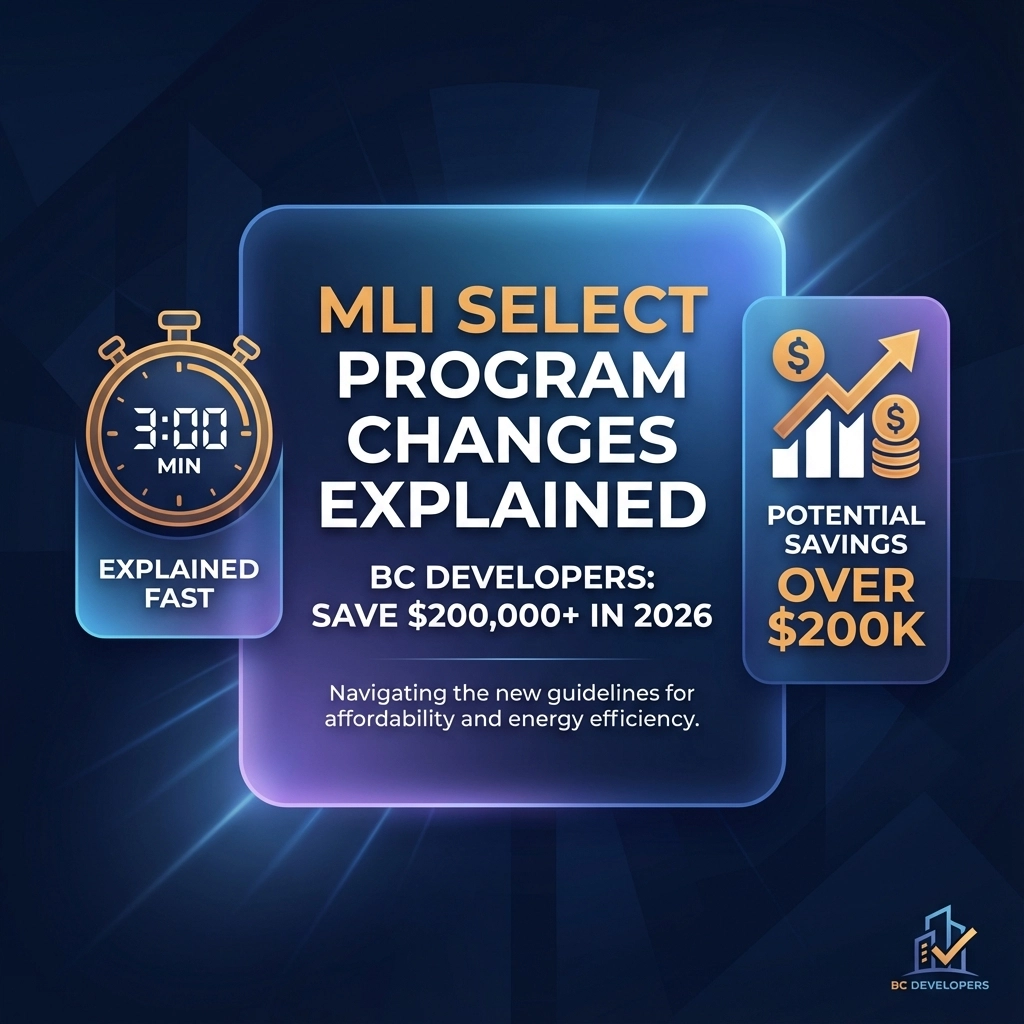
  • MLI Select Program Changes Explained in Under 3 Minutes: How BC Developers Can Save $200,000+ in 2026

    MLI Select Program Changes Explained in Under 3 Minutes: How BC Developers Can Save $200,000+ in 2026

    Quick Summary (1 Minute Read)

    The Bottom Line: MLI Select's 2026 changes deliver massive premium discounts: up to 30%: through a simplified point system. BC developers can save $200,000+ on larger projects by strategically targeting energy efficiency, affordability, and accessibility commitments during the September 30, 2026 transition period.

    Key Dates: November 28, 2025 changes are live, with a transition window until September 30, 2026 for energy standards.

    Biggest Win: Projects achieving 100+ points unlock 30% premium discounts AND 50-year amortizations, dramatically reducing both insurance costs and monthly debt service.


    The New MLI Select Discount Structure (Game Changer)

    Gone are the complex minimum requirements that trapped developers in rigid commitments. The 2026 MLI Select program operates on pure flexibility: you choose your commitment level and earn proportional discounts.

    Here's the new discount schedule that's saving BC developers serious money:

    • 50+ Points = 10% Premium Discount
    • 70+ Points = 20% Premium Discount
    • 100+ Points = 30% Premium Discount

    "The removal of minimum requirements changes everything," explains Varun Chaudhry, Financial Advisor at Kraft Mortgages Canada Inc. "Developers can now strategically pick their battles: focus on energy efficiency if that's your strength, or prioritize affordable units if land costs are favorable. You're no longer forced into a one-size-fits-all approach."

    image_1

    Real Numbers: Surrey 24-Unit Development Example

    Let's break down the actual savings on a typical Metro Vancouver project: a $5 million, 24-unit rental building in Surrey.

    Traditional MLI Standard Premium: 3.35%
    Cost: $167,500

    MLI Select with 70+ Points (20% discount): 2.68%
    Cost: $134,000
    Immediate Savings: $33,500

    MLI Select with 100+ Points (30% discount): 2.35%
    Cost: $117,500
    Immediate Savings: $50,000

    But here's where the real magic happens: extended amortization periods:

    • 70+ points unlock 45-year amortizations
    • 100+ points unlock 50-year amortizations

    On our Surrey example, extending from 25 to 45 years reduces monthly debt service by approximately $8,200. That's $98,400 annually in improved cash flow.

    The September 2026 Energy Efficiency Window

    Here's your strategic advantage: Until September 30, 2026, projects can qualify under either the previous energy standards OR the new 2020 NECB and 2020 NBC criteria.

    This transition period creates a unique opportunity for BC developers:

    Option 1: Fast-track projects using familiar energy standards you've already mastered
    Option 2: Invest in upgraded energy efficiency for higher point totals and bigger discounts

    "Smart developers are running dual scenarios right now," notes Chaudhry. "We're seeing projects that can hit 70+ points under the old standards, but might stretch to 100+ points with strategic energy upgrades. The mortgage affordability calculator BC numbers don't lie: sometimes that extra 10% discount justifies significant energy investments."

    image_2

    Where the Biggest Savings Hide

    MLI Select discounts become exponentially more valuable on specific project types:

    Construction Loans

    Construction financing typically carries higher premiums due to risk factors. The 30% MLI Select discount applies AFTER these surcharges, making the absolute dollar savings massive.

    Higher-LTV Projects (85%+)

    Projects with limited equity see premium surcharges that can push base rates to 6-7%. A 30% discount on these elevated premiums delivers outsized returns.

    Specialized Housing (Student, Seniors, Supportive)

    These projects often face additional premium layers. MLI Select's percentage-based discounts stack powerfully on top of specialized housing surcharges.

    Strategic Point Optimization for BC Markets

    The MLI Select point system rewards three core areas:

    Affordability (Up to 50 Points)

    • Below-market rental commitments
    • Rent-geared-to-income units
    • Affordable homeownership components

    BC Advantage: Metro Vancouver's rent control environment makes affordable commitments more predictable than in other markets.

    Energy Efficiency (Up to 50 Points)

    • 2020 NECB compliance (new standard)
    • Advanced building envelope performance
    • Renewable energy integration

    BC Advantage: BC Hydro rebates and CleanBC incentives can offset energy upgrade costs, making higher point targets financially viable.

    Accessibility (Up to 50 Points)

    • Universal design features
    • Above-code accessibility standards
    • Barrier-free unit percentages

    image_3

    Why Your Edmonton Mortgage Broker Might Miss This

    MLI Select optimization requires intimate knowledge of both CMHC's evolving criteria AND local market dynamics. A mortgage broker in Alberta or Edmonton mortgage broker might understand the program mechanics, but miss BC-specific opportunities:

    • BC Hydro's Step Code requirements that overlap with MLI Select energy points
    • Metro Vancouver's rental market conditions that make certain affordable commitments viable
    • Provincial accessibility standards that exceed federal minimums

    "We're seeing out-of-province brokers recommend safe 50-point strategies when their BC clients could easily hit 70+ points with local knowledge," explains Chaudhry. "That's leaving $20,000-$50,000 on the table for mid-sized projects."

    The Appraisal Enhancement Factor

    Recent MLI Select changes include enhanced appraisal requirements that actually benefit prepared developers. CMHC now requires detailed documentation of MLI Select commitments during the appraisal process.

    This creates competitive advantages for developers who:

    • Document their MLI Select strategy early in project planning
    • Work with mortgage broker Surrey professionals who understand the appraisal requirements
    • Build relationships with appraisers familiar with MLI Select valuations

    Timing Your MLI Select Application

    The optimal application timing depends on your project's complexity and point strategy:

    50-Point Strategy (10% Discount): Can often be confirmed at preliminary approval stage with basic commitments

    70-Point Strategy (20% Discount): Requires more detailed planning but offers substantial savings on projects over $3 million

    100-Point Strategy (30% Discount): Demands comprehensive early-stage planning but unlocks maximum savings plus 50-year amortizations

    "The biggest mistake we see is developers treating MLI Select as an afterthought," warns Chaudhry. "The point optimization needs to start during land acquisition. Your mortgage broker Surrey team should be running MLI Select scenarios before you finalize your development pro forma."

    image_4

    Looking Beyond 2026

    CMHC continues evolving MLI Select to support federal housing targets. Early indicators suggest future enhancements could include:

    • Additional points for climate resilience features
    • Expanded affordability definitions aligned with local market conditions
    • Technology integration points for smart building features

    Developers establishing MLI Select expertise now position themselves for ongoing advantages as the program expands.

    Next Steps for BC Developers

    The September 30, 2026 transition deadline creates urgency for projects in pre-development phases. Your immediate action items:

    1. Run MLI Select scenarios on current projects using both old and new energy standards
    2. Evaluate point optimization strategies that align with your development strengths
    3. Connect with specialized financing advisors who understand MLI Select mechanics and BC market conditions

    The potential savings: $200,000+ on larger projects: justify significant upfront planning investment.

    Ready to optimize your MLI Select strategy and unlock maximum savings? Contact Kraft Mortgages Canada Inc. to schedule a discovery call with Varun Chaudhry and explore how the 2026 MLI Select changes can transform your project economics.

    Your development's success depends on accessing every available advantage; and MLI Select's enhanced discount structure delivers exactly that opportunity.

  • Self-Employed in Burnaby? Here's the Truth About Getting Approved When Banks Say No

    Self-Employed in Burnaby? Here's the Truth About Getting Approved When Banks Say No

    3-minute read

    Your business is crushing it. Monthly deposits hit $15,000, $20,000, sometimes more. But when you walk into TD, RBC, or BMO with your Notice of Assessment showing $48,000 taxable income, they treat you like a financial risk. Sound familiar?

    Here's what 73% of self-employed borrowers in Burnaby don't know: While traditional banks focus on your written-down taxable income, alternative B-lenders are approving mortgages based on your actual business cash flow using 12 months of bank statements. No tax documents required.

    Why Traditional Banks Keep Saying "No"

    1-minute reality check

    Banks operate on rigid guidelines designed for salaried employees. When you're self-employed in Burnaby's competitive market, three factors work against you:

    The Tax Write-Off Trap: You legally minimize taxable income through business expenses, vehicle depreciation, and home office deductions. Your accountant saves you thousands in taxes, but banks see low income on paper.

    Income Fluctuation Penalty: Seasonal contractors, consultants, and small business owners rarely show identical income year-over-year. Banks want predictable W-2 consistency that doesn't exist in entrepreneurial reality.

    Documentation Overload: Traditional lenders demand 2+ years of tax returns, business financial statements, profit/loss documents, and CPA letters. Even minor discrepancies trigger rejections.

    Result? Qualified borrowers with strong businesses get declined while watching salaried employees with identical income (but on paystubs) walk away with approvals.

    image_1

    The B-Lending Solution: Bank Statement Programs

    5-minute game changer

    Alternative lenders recognize the gap between written income and actual cash flow. B-lending programs specifically designed for self-employed borrowers use 12-month business bank statement analysis to calculate your true buying power.

    How Bank Statement Income Works:

    Your mortgage broker burnaby bc specialist pulls 12 months of business banking activity and calculates average monthly deposits. The lender then applies a debt service ratio (typically 75-80% of gross deposits) to determine qualifying income.

    Real Burnaby Example:

    • Business deposits average $18,500/month over 12 months
    • Calculated gross income: $222,000 annually
    • Debt service ratio applied: 75% = $166,500 qualifying income
    • Mortgage qualification: ~$750,000 (with 20% down)

    Bank statements only for income—no NOAs or accountant letters. Typically available up to 80% LTV, ideal if you write off heavily but show strong, consistent cash flow.

    Who Qualifies for Bank Statement Programs?

    3-minute qualification guide

    B-lenders have specific criteria that differ dramatically from traditional banks:

    Minimum Requirements:

    • 2+ years of self-employment in the same industry
    • 10-20% down payment (higher than traditional 5%)
    • Credit score 650+ (some lenders accept 600+)
    • Business bank account showing consistent deposits
    • Current business license and insurance

    Income Calculation Method:
    Lenders review monthly deposits, subtract any obvious loan proceeds or transfers, then average the remaining business income. Personal deposits don't count, they need legitimate business revenue.

    Debt Service Ratios:
    Unlike traditional banks using gross debt service ratio of 32%, B-lenders often accept total debt service up to 45-50% of calculated income.

    Kraft Mortgages Canada Inc. Professional

    Interest Rates and Terms: The Trade-Off Reality

    2-minute cost breakdown

    B-lending comes with a modest premium—typically around 1% above major bank rates—not the dramatic markup many expect. For growing businesses, that small spread is a very affordable bridge until you refinance back to A rates.

    Current B-Lender Pricing (January 2025):

    • Typical premium vs. traditional banks: ~1% (often 0.75%–1.50% based on credit, LTV, and file strength)
    • Pricing varies by lender, product, and property type; unique or higher-risk files may be higher

    Term Options:
    Most B-lenders offer 1-3 year terms, not traditional 5-year mortgages. The strategy involves using B-lending to establish mortgage history, then refinancing to traditional lenders at renewal.

    Total Cost Example (Burnaby Townhouse):

    • $800,000 mortgage at 5.75% (B-lender) vs 4.75% traditional rate
    • Additional annual interest cost: ~$8,000–$9,000
    • Trade-off: Home ownership now with a plan to refinance vs waiting indefinitely for traditional approval

    The Stated Income Alternative

    2-minute advanced option

    Some B-lenders offer stated income programs where you declare reasonable income based on industry standards without full bank statement analysis.

    How Stated Income Works:
    You state income consistent with your business type and geographic market. Lender verifies business existence, licensing, and basic financial stability, but doesn't calculate income from deposits.

    Requirements:

    • Higher down payments (25-35%)
    • Strong credit scores (720+)
    • Verifiable business operations
    • Industry-appropriate income claims

    Risk Factor: Overstating income creates qualification problems and potential legal issues. Work with experienced mortgage broker surrey specialists who understand reasonable income ranges by industry.

    image_2

    Alt-A Insured Solutions: Up to 90% LTV for Self-Employed

    2-minute option

    Insured “Alt-A” programs—offered through Canada Guaranty and Sagen—allow high-ratio financing up to 90% LTV using a reasonable stated income supported by business bank statements.

    • What it is: Insurer-backed approvals that accept stated income validated by 6–12 months of business deposits and business documentation.
    • What you can get: Purchases up to 90% LTV with pricing closer to A than typical B-lending.
    • What it requires: Notices of Assessment (NOAs) to confirm 2-year business history and, crucially, to prove no outstanding CRA income tax arrears—plus clean credit and stable operations.
    • Who it helps: Business owners with strong cash flow but modest declared net income who need higher LTV and competitive pricing.

    Smart borrowers compare lender and insurer rules side by side. Speak with Varun Chaudhry to see whether an insured Alt-A path or a traditional B bank‑statement program fits your file best.

    Documentation You Actually Need

    1-minute prep checklist

    B-lending dramatically reduces paperwork compared to traditional banks:

    Essential Documents:

    • 12 months business bank statements
    • Business license and registration
    • Personal identification and SIN
    • Down payment source verification
    • Credit authorization

    NOT Required:

    • Tax returns or Notices of Assessment
    • Profit and loss statements
    • CPA-prepared financial statements
    • Employment verification letters
    • T4/T5 slips

    Varun Chaudhry: B-Lending vs. Insured Alt-A—Get the Right Fit

    30-second credibility check

    Varun Chaudhry at Kraft Mortgages Canada Inc. specializes in complex self-employed files that traditional brokers won't touch. He compares B-lender bank‑statement solutions (up to 80% LTV, no NOAs for income) with insured Alt‑A options (up to 90% LTV with NOAs to confirm history and no tax arrears) and recommends the path that fits your tax profile and down payment.

    Track Record:

    • 15+ years navigating alternative lending markets
    • Direct relationships with 12+ B-lenders serving BC plus insurer-approved Alt-A programs (Canada Guaranty, Sagen)
    • Successfully structured stated income and bank statement approvals for contractors, consultants, and business owners throughout Burnaby and Surrey

    The Kraft Advantage: While big banks operate on rigid computer algorithms, Varun manually structures files to highlight your business strengths—and knows exactly when B-lending vs. insured Alt-A will deliver the best outcome.

    Next Steps: Your Approval Strategy

    2-minute action plan

    Immediate Actions:

    1. Compile 12 months of business bank statements showing consistent revenue deposits
    2. Check your credit score through free services, aim for 650+ minimum
    3. Calculate your down payment capacity including closing costs (budget 12% of purchase price total)

    Professional Strategy:
    Contact Kraft Mortgages Canada Inc. for a confidential consultation. Varun will review your business cash flow, assess B-lender options, and structure your application for maximum approval odds.

    Use our mortgage affordability calculator bc to estimate buying power based on bank statement income before applying.

    The Bottom Line

    Traditional banks saying "no" doesn't end your homeownership journey: it redirects it. B-lending programs designed for self-employed borrowers in Burnaby recognize that business cash flow matters more than tax-minimized paper income.

    The trade-off is real: Higher rates and shorter terms in exchange for approval when traditional lenders won't budge. But for qualified self-employed borrowers, B-lending provides immediate access to homeownership with a path back to traditional rates at renewal.

    Ready to explore your options? Contact Varun Chaudhry directly at Kraft Mortgages Canada Inc. for a no-obligation consultation about bank statement mortgage programs. Your business success deserves a mortgage solution that recognizes actual cash flow, not just paper income.

  • Hello world!

    Welcome to WordPress. This is your first post. Edit or delete it, then start writing!