Burnaby Mortgage Broker Guide 2026: Rates, Neighbourhoods & How to Get Approved
Buying a Home in Burnaby? Here’s What You Actually Need to Know About Getting a Mortgage
If you’re looking at condos near Metrotown, townhomes in Brentwood, or a detached house up near SFU — you’re probably realizing that the mortgage side of things is where it gets real. Rates move weekly. Lenders have different appetites for different property types. And the difference between a good broker and a mediocre one can literally save you thousands over the life of your mortgage.
I’ve been doing this for years from our office in Surrey, and honestly, Burnaby is one of my favourite markets to work in. It’s diverse, it’s fast-moving, and every neighbourhood has its own quirks that lenders care about. Let me walk you through what matters right now in 2026.
Key Takeaways
- ✅ Burnaby’s 2026 benchmark prices: condos ~$780K, townhomes ~$1.05M, detached ~$1.85M
- ✅ Best 5-year fixed rates sitting around 4.49–4.89% depending on lender and deal type
- ✅ Each neighbourhood has different lender considerations — strata age, density, zoning
- ✅ Pre-approval takes 24–48 hours and is free — no reason to skip it
- ✅ Working with a broker gives you access to 60+ lenders vs. one bank’s products
Burnaby Real Estate in 2026: What the Numbers Look Like
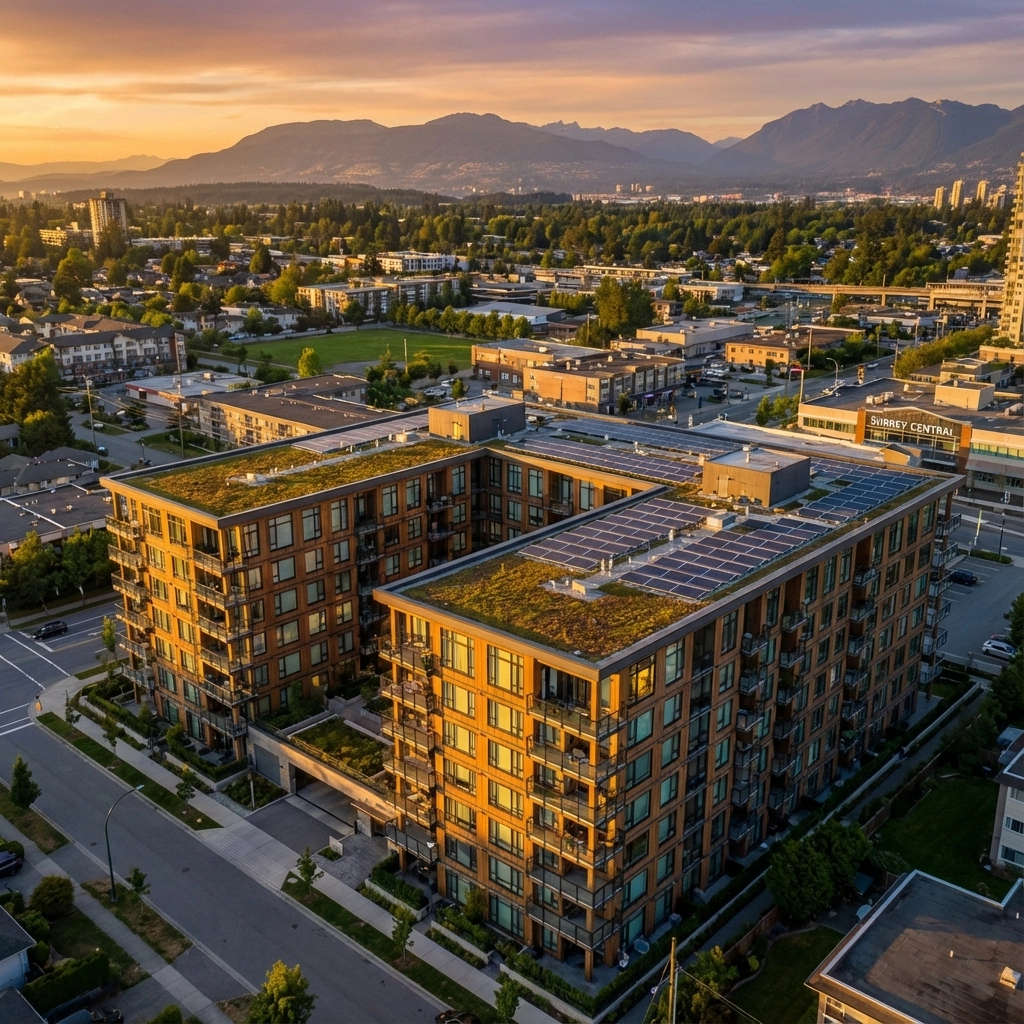
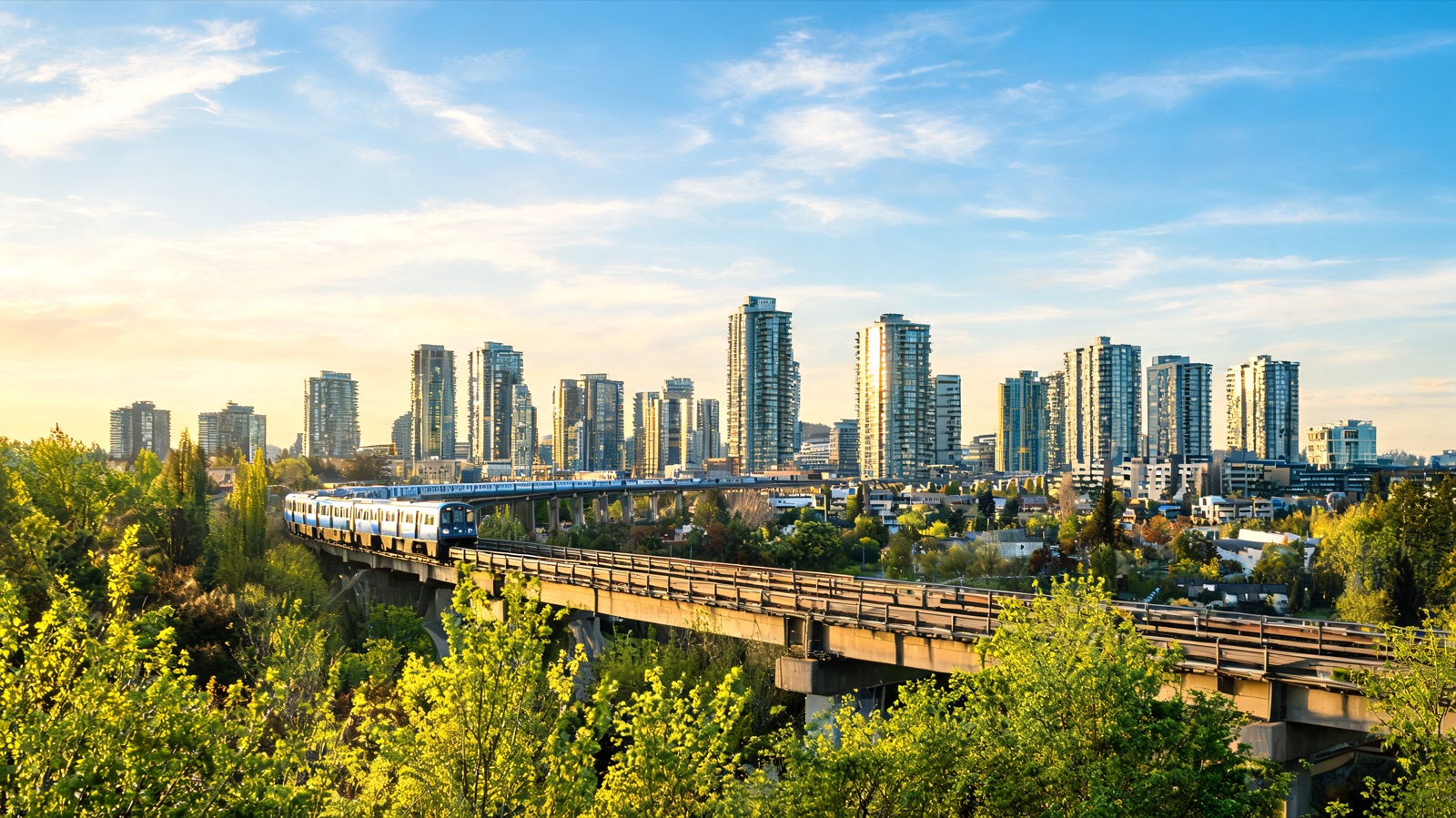
Burnaby has been on a tear since the SkyTrain expansion and the Brentwood/Metrotown buildouts. It’s not just a Vancouver suburb anymore — it’s its own city with serious demand drivers: SFU, BCIT, Metropolis at Metrotown, The Amazing Brentwood, and the ongoing tower developments along Lougheed Highway.
Here’s what we’re seeing on the ground in 2026:
- Condos: Benchmark around $780,000. Newer towers near Brentwood and Metrotown command premiums. Older stock in Edmonds and around Imperial is more affordable but comes with strata age considerations.
- Townhomes: Benchmark around $1,050,000. The gap between townhome and condo prices has widened, making townhomes in areas like Simon Fraser Hills and Government Road surprisingly competitive.
- Detached homes: Benchmark around $1,850,000. These are getting rarer. Most detached inventory is in the Burnaby Mountain, South Slope, and Capitol Hill areas.
What does this mean for your mortgage? The entry point is high enough that most buyers need strong income documentation, and the property type matters more than ever for lender approval.
Neighbourhood Breakdown: What Lenders See
Not all Burnaby addresses are equal in a lender’s eyes. Here’s what I’ve seen matter when submitting deals:
Metrotown (V5H)
- Density: High-rise condos dominate
- Lender view: Strong — major transit hub, established retail, high demand
- Watch for: Strata fees in older towers (Station Square-era buildings can run $500+/month)
- Typical buyer: First-time buyers, investors, downsizers
Brentwood (V5C/V5G)
- Density: Rapidly developing with new towers at The Amazing Brentwood
- Lender view: Very strong — newest development, great transit, high resale potential
- Watch for: Assignment sale restrictions, occupancy fees during rental restrictions
- Typical buyer: Young professionals, investors, move-up buyers
Lougheed (V5J/V5K)
- Density: Mixed — older low-rises and new towers near Lougheed Town Centre
- Lender view: Good — prices slightly below Metrotown/Brentwood, solid rental demand
- Watch for: Some buildings near the highway have noise disclosures that affect appraisals
- Typical buyer: Budget-conscious first-timers, investors
Edmonds (V5J)
- Density: Low-to-mid rise, more ground-oriented housing
- Lender view: Decent — some older buildings need careful strata review
- Watch for: Pre-1990 buildings may have envelope issues; always request depreciation reports
- Typical buyer: Families, value seekers
SFU / Burnaby Mountain (V5A)
- Density: Mix of condos on campus and detached in surrounding neighbourhoods
- Lender view: Solid for condos — strong rental market from students. Detached homes here hold value well.
- Watch for: SFU UniverCity condos sometimes have restrictive rental bylaws
- Typical buyer: Student housing investors, young families, SFU staff
Current Mortgage Rates for Burnaby Buyers (Spring 2026)
Rates have come down from the 2023–2024 peaks, but we’re not back to the 2% days. Here’s what’s actually available right now when I shop a deal across my lender panel:
Rate Snapshot — May 2026
- 5-Year Fixed (insured, <20% down): 4.49% – 4.69%
- 5-Year Fixed (conventional, 20%+ down): 4.69% – 4.89%
- 5-Year Variable: Prime – 0.50% to Prime – 0.25% (currently ~4.95% – 5.20%)
- 3-Year Fixed: 4.39% – 4.59%
- 2-Year Fixed: 4.59% – 4.79%
- 10-Year Fixed: 5.49% – 5.89%
Rates shown are for well-qualified borrowers (credit 700+, stable income). Actual rates vary by lender, loan-to-value, and property type. Always get a personalized quote.
Here’s the thing about rates — the number on the website is rarely the number you actually get. Lenders offer different rates for different situations. A buyer putting 10% down on a $780K Metrotown condo is going to see different pricing than someone putting 35% down on a $1.85M detached home in South Slope. That’s where a broker earns their keep — we know which lenders are pricing aggressively for which scenarios.
Fixed vs. Variable in 2026: My Honest Take
I’ve had this conversation probably 200 times this year. The short version: if you’re buying in Burnaby right now, the gap between fixed and variable is narrow enough that it comes down to your risk tolerance and timeline.
Going variable makes sense if you think the Bank of Canada is going to keep cutting and you can stomach the ride. Fixed gives you certainty — and with 3-year fixed rates below 5-year rates right now, a shorter fixed term is a compelling middle ground. You lock in a reasonable rate for three years and reassess when the market has more clarity.
For what it’s worth, about 60% of my Burnaby clients this year have gone with 3- or 5-year fixed. The other 40% went variable, mostly investors who are watching cash flow closely and want the option to break cheaply if rates drop further.
How to Get Approved: The Playbook
Getting a mortgage in Burnaby isn’t fundamentally different from anywhere else in BC, but the price points mean the numbers need to be tight. Here’s what lenders actually look at:
1. Your Income — And How You Prove It
If you’re a salaried employee, this is straightforward: T4s, pay stubs, and an employment letter. Most lenders want to see at least two years at your current job or in the same industry.
If you’re self-employed — and there are a lot of self-employed folks in Burnaby, especially tech workers and small business owners — lenders want to see two years of T1 generals with your NOA, plus business financials if you’re incorporated. The challenge is that self-employed income on paper often doesn’t reflect what you actually earn, because you’re writing off expenses. This is where B-lender and private mortgage options come in.
Real Example (Anonymized)
Client: Software developer, incorporated, living in Brentwood. T1 showed $85K income after write-offs. Actual cash flow was closer to $160K. We went with a B-lender who used stated income at $140K, got approved for a $750K purchase at 5.2% on a 2-year term. After two years of clean payments, we’ll move them to an A-lender at a better rate.
2. Your Down Payment
In Burnaby, this is where most people feel the squeeze. Here’s what you need:
- Under $500K: 5% minimum (getting rare in Burnaby — maybe a studio in an older Edmonds building)
- $500K to $999,999: 5% on the first $500K + 10% on the remainder
- $1M to $1.5M: 5% on the first $500K + 10% on the $500K–$1M portion + 15% on the amount over $1M (new 2024 rules)
- Over $1.5M: 20% minimum — no mortgage default insurance available
So on a $780K Metrotown condo, you need about $53,900 down. On a $1.05M Brentwood townhome, you’re looking at roughly $82,500. And on that $1.85M detached home, you need $370,000 minimum.
First-time buyers can pull up to $60,000 from their RRSP through the Home Buyers’ Plan (HBP was increased in the 2024 federal budget). That’s a meaningful chunk for a condo purchase.
3. The Stress Test
You still need to qualify at the Bank of Canada qualifying rate or your contract rate + 2%, whichever is higher. As of spring 2026, that means qualifying at roughly 6.49%–6.89% even though your actual rate is closer to 4.5%.
On a $780K condo with $53,900 down and a 5-year fixed at 4.59%, you’d need around $135,000–$145,000 in household income to pass the stress test. That’s the reality for most Burnaby condo purchases.
We have a mortgage calculator on our site if you want to run your own numbers before we talk.
4. Credit Score Requirements
Most A-lenders want to see 680+. Below that, you’re not out of options — B-lenders will go down to the low 600s, and private lenders don’t care about your score at all (they care about the property’s loan-to-value).
If your credit has some dings, don’t panic. I’ve worked with clients who had collections from old phone bills or missed credit card payments that tanked their score. We dispute what we can, pay off what’s hurting the most, and often get the score up 40–60 points in a few months. Sometimes faster.
First-Time Home Buyer Programs That Apply in Burnaby
If you’ve never owned a home (or haven’t in the last 4 years), there are real programs that can help:
- First Home Savings Account (FHSA): $8,000/year contribution limit, tax-deductible going in, tax-free coming out for a first home. If you haven’t opened one yet, do it this week. It’s the best tool available.
- Home Buyers’ Plan (HBP): Pull up to $60,000 from your RRSP tax-free. Repay over 15 years.
- Property Transfer Tax Exemption: In BC, first-time buyers are exempt on homes up to $500,000. Partial exemption up to $835,000 (as of 2024 updates). On a $780K Burnaby condo, you’d still pay some PTT but get a meaningful reduction.
- BC First-Time Home Buyer Loan: The province offers a loan equal to 5% of the purchase price (up to certain limits) for first-time buyers with household income under $150,000. It’s forgivable after 25 years or when you sell.
These programs stack. An FHSA + HBP + PTT exemption can mean the difference between renting another year and buying now.
Investment Properties in Burnaby: The Mortgage Angle
Burnaby is a landlord’s dream market — SFU, BCIT, and proximity to Vancouver mean vacancy rates sit around 1–2%. But the mortgage rules for investment properties are different:
- Minimum 20% down for a rental property (no mortgage insurance available)
- Stress test still applies — qualify at the higher rate
- Rental offset: Most A-lenders add 50–80% of projected rental income to your qualifying income. Some lenders are more generous than others — this is where broker access matters.
- Rates are typically 0.10–0.25% higher than owner-occupied rates
I’ve placed a lot of rental mortgages in the Metrotown and Brentwood corridors. The sweet spot right now is 1-bedroom plus den units in newer buildings — they rent for $2,400–$2,800/month, and with 20% down, you can often achieve neutral or slightly positive cash flow at current rates.
New Construction and Pre-Sale Mortgages in Burnaby
There’s a massive amount of new inventory coming to Burnaby. Towers at Brentwood, Metrotown, and Lougheed are all in various stages of completion. If you’re buying pre-sale, here’s what you need to know about the mortgage side:
- Get pre-approved early. Most pre-sales close 2–4 years after purchase. Your financial situation may change, rate environments will change. Having a broker lined up well before completion is critical.
- Assignment clauses matter. Some developers restrict your ability to sell the contract before completion. If you can’t close and can’t assign, you lose your deposit. Know this going in.
- Appraisal risk is real. If the market dips between when you sign and when you close, the appraisal might come in lower than your purchase price. You’d need to cover the gap in cash.
- Occupancy fees. Before final closing, you pay “occupancy fees” (essentially rent) while the building gets registered. Budget for 3–9 months of this.
We help clients navigate pre-sale financing all the time. The key is not waiting until the developer sends you that “30 days to closing” letter.
Refinancing Your Burnaby Property
Already own in Burnaby and sitting on some equity? You’re probably in good shape — values have held strong, especially in Metrotown and Brentwood. Refinancing options right now:
- Refinance up to 80% of appraised value (for conventional mortgages)
- HELOC up to 65% of value, or combined mortgage + HELOC up to 80%
- Common uses: Debt consolidation, renovation, investment down payment, business capital
I had a client in Capitol Hill who bought a detached home in 2019 for $1.3M. It appraised at $1.95M in early 2026. They refinanced, pulled out $260K, paid off high-interest business debt, and their monthly payments barely changed because the rate was better than what they had before.
That’s the kind of outcome that reminds me why I do this. Real numbers, real impact.
Private Mortgages and B-Lender Options in Burnaby
Not everyone fits the A-lender box. Self-employed borrowers, people with bruised credit, borrowers with non-traditional income — Burnaby has a lot of these situations. Here’s the good news: you have options.
B-Lenders
Think of B-lenders as the middle ground between bank mortgages and private lending. They’ll accept stated income (with some verification), lower credit scores, and more complex situations. Rates run about 0.75–1.5% higher than A-lender rates, but they’re a stepping stone. Most B-lender clients refinance to an A-lender after 1–2 years of clean payments.
Private Mortgages
Private lending is strictly equity-based. The lender looks at the property’s loan-to-value ratio and charges accordingly. Rates typically range from 7–12%, with lender fees of 1–3%. It’s not cheap, but it’s fast and flexible. Common uses in Burnaby:
- Bridge financing between purchases
- Construction or renovation funding
- Stopping a foreclosure or power of sale
- Timing-sensitive deals where A-lenders can’t move fast enough
We work with private lenders who know the Burnaby market and can close in 5–10 business days. Speed and certainty matter when you’re competing with other buyers.
Why Work With a Mortgage Broker vs. Your Bank
I’ll be direct about this. Your bank has one set of products, one set of rates, and one set of guidelines. A broker has access to over 60 lenders — big banks, credit unions, mono-line lenders, B-lenders, and private lenders.
Here’s what that means in practice:
- Rate competition. When I submit a deal, lenders compete for it. Your bank gives you what they give you.
- Product flexibility. Need a mortgage that allows 20% prepayments? Or one with a portable feature because you might upgrade in 3 years? Different lenders offer different features. We match you with the right one.
- Deal structuring. Sometimes the way you structure the deal matters more than the rate. Adding a HELOC component, splitting the mortgage into two portions, using a cash-back to cover closing costs — these are moves your bank might not suggest.
- Declined? Not done. If your bank says no, that’s it. If one of my 60+ lenders says no, I move to the next one. I’ve closed deals that three banks turned down.
Our services are free for most purchases (the lender pays us). For complex deals, private mortgages, or commercial files, we discuss fees upfront — always transparent, no surprises.
The Pre-Approval Process: Step by Step
Getting pre-approved is the first real step. Here’s exactly how it works when you work with us:
- Quick conversation — 10–15 minutes on the phone or over video. We cover your goals, income, down payment, and what you’re looking for in Burnaby.
- Document collection — We send you a list of what we need (pay stubs, T4s, bank statements, etc.). Most people have everything within a day.
- We shop your deal — We submit to our lender panel, negotiate the best rate, and get you a firm pre-approval with a rate hold (usually 90–120 days).
- You go shopping with confidence — Your realtor knows you’re serious. Sellers know you can close. And you know exactly what you can afford.
The whole thing takes 24–48 hours from when you send us documents. No cost, no obligation.
Frequently Asked Questions
Can I buy a home in Burnaby with less than 20% down?
Yes. For properties under $1.5M, you can put as little as 5% down (on a sliding scale). You’ll need mortgage default insurance through CMHC, Sagen, or Canada Guaranty, which adds 2.8–4% to your mortgage amount. On a $780K condo with 10% down, the insurance premium would be about $25,740 — added to your mortgage, not paid upfront.
How much income do I need to buy a condo in Burnaby?
For a $780K condo with 10% down at 4.59% on a 5-year fixed (25-year amortization), you need roughly $135,000–$145,000 in household income to pass the stress test. If you have a partner, both incomes count. We also factor in property tax, strata fees, and heating costs.
Is Burnaby a good place to buy an investment property?
The fundamentals are strong: major universities (SFU, BCIT), SkyTrain access, massive commercial development, and vacancy rates under 2%. Cap rates are tight at current prices, but long-term appreciation has been consistent. I’d put Burnaby in the top 5 BC cities for rental investment.
What’s the difference between a mortgage broker and a bank mortgage specialist?
A bank specialist can only offer that bank’s products and rates. A mortgage broker can shop across 60+ lenders to find the best rate and product for your situation. Brokers are licensed, regulated by BCFSA, and owe you a duty of care. Bank specialists are employees of the bank — their job is to sell you that bank’s mortgage.
How long does mortgage approval take?
Pre-approval: 24–48 hours. Full approval after you have an accepted offer: 5–10 business days for A-lenders, faster for some. Private mortgages can close in as little as 5 business days.
Can self-employed buyers get a mortgage in Burnaby?
Absolutely. We do these deals weekly. A-lenders want to see two years of tax returns and may use an average of your net income. B-lenders allow stated income programs that are more generous. The key is working with someone who knows which lenders are friendly to self-employed borrowers — not all of them are.
Should I choose a fixed or variable rate in 2026?
It depends on your situation. Fixed rates offer certainty — you know your payment for the full term. Variable rates offer flexibility (lower penalties to break, potential savings if rates drop) but carry risk. In the current environment, I often recommend a 3-year fixed as a compromise — you lock in a decent rate but aren’t locked in for five years if the market shifts.
Ready to Make Your Move in Burnaby?
Whether you’re a first-time buyer looking at a Metrotown condo, a family upgrading to a townhome in Brentwood, or an investor adding another unit to your portfolio — the mortgage is the engine that makes it happen. And getting it right matters.
I’ve helped hundreds of buyers navigate the Burnaby market. I know which lenders love strata condos, which ones are picky about older buildings, and where to get the best rate for your specific deal. No two files are the same, and that’s exactly why a cookie-cutter bank approach doesn’t cut it.
Get Your Free Pre-Approval
Lock in your rate. Know your budget. Shop with confidence.
Written by Varun Chaudhry, Licensed Mortgage Broker, BCFSA #M08001935. President, Kraft Mortgages Canada Inc. Serving Burnaby, Surrey, Vancouver, and all of BC.
Disclaimer: This article is for informational purposes only and does not constitute financial advice. Mortgage rates and guidelines change frequently. Contact us for current rates and personalized advice specific to your situation.